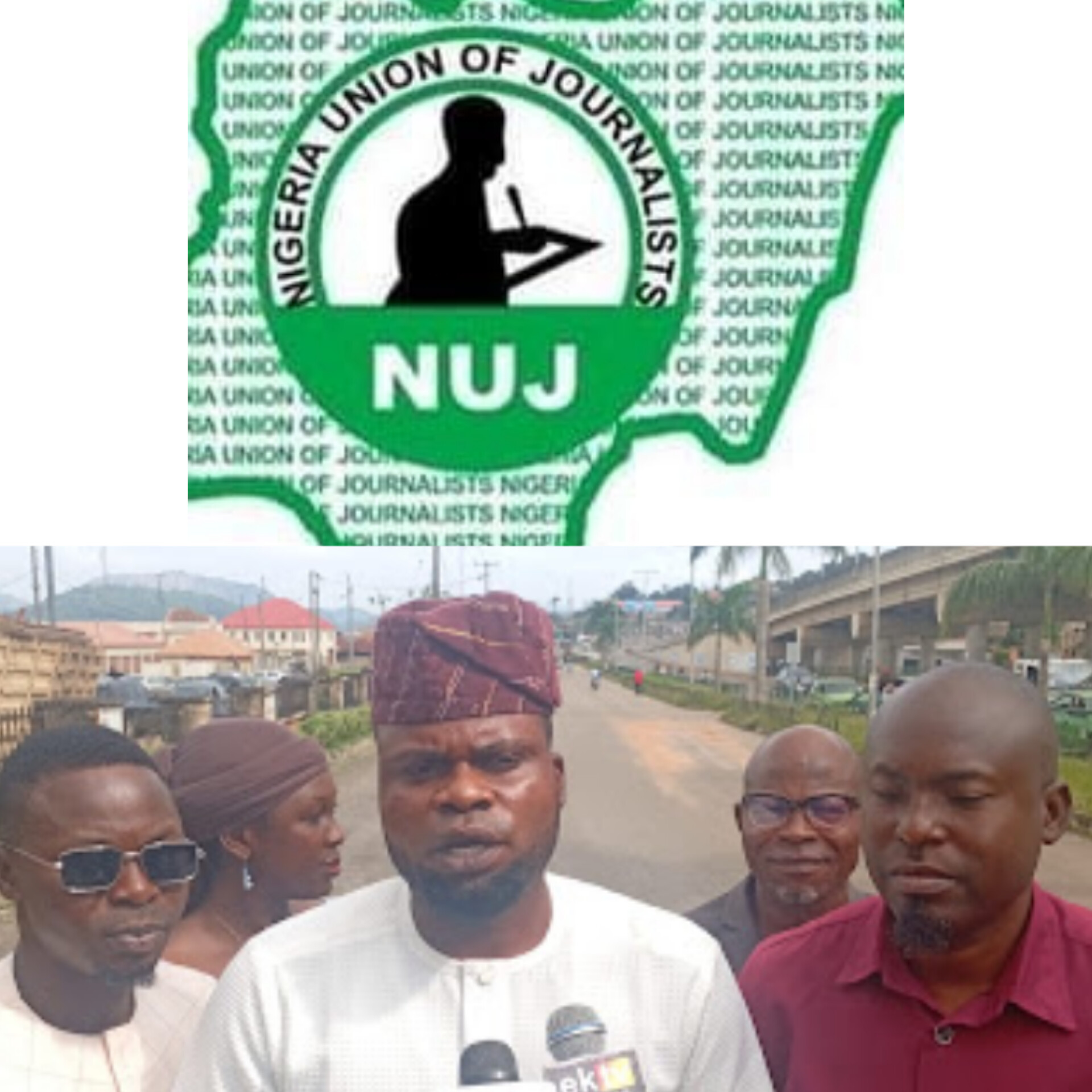
- By Demola Atobaba, Ado-Ekiti
The Nigeria Union of Journalists (NUJ), Ekiti State Council, has declared a sustained war against quack journalists and individuals impersonating professional journalists in the state.
The council said the ongoing anti-quackery campaign was aimed at sanitising the media industry, protecting the integrity of journalism and preventing members of the public from falling victim to individuals who use the identity and insignia of the union to perpetrate crimes.
The state NUJ Chairman, Comrade Kayode Babatuyi, stated this in Ado-Ekiti during an anti-quackery exercise in Ekiti, saying the union had identified a growing trend in which individuals with smartphones and access to social media platforms present themselves as journalists without the requisite professional credentials.

Babatuyi said the exercise was also designed to draw a clear distinction between professional journalists and content creators, stressing that owning an Android phone or operating a social media platform did not automatically make anyone a journalist.
His words, “We are here this morning to sanitise the media industry and to allow members of the public to see that the profession is not a joke.
“We have noticed impersonation of our profession. A lot of people, because they think they have an Android phone, think they are journalists. We want to draw that line to enable them to see the difference between a professional journalist and a content creator.
“Today, we have come out to fight against those who have been impersonating us, who are quacks, who are not professional journalists, especially those who have been using the emblem of our union to perpetrate crimes.
“We are grateful that we have been able to apprehend some. This is just the tip of the iceberg. It is just a warning. We have not come fully yet.
“This is just to send a signal to them that we will be back fully, and whoever is arrested, we will ensure that we prosecute the person and send them to where they belong”.
Also speaking, Chairman of the Anti-Quackery Committee of the Ekiti NUJ Council, Abiodun Olofe, said the campaign was directed at two major groups: members of the public and individuals operating as fake journalists.
Olofe urged the public to be cautious when dealing with people who claim to be journalists, warning that quacks were capable of spreading misinformation and damaging the credibility of genuine media practitioners.
He said the public should deal only with journalists who could be properly identified and certified, adding that the NUJ had introduced official identification stickers as part of efforts to distinguish legitimate practitioners from impostors.
Olofe added that the NUJ would not tolerate the activities of fake journalists in Ekiti, saying individuals already identified as operating illegally would be dealt with in accordance with the law.
His words, “The essence of this exercise is simple. We are passing a message to the general public that they should be aware of the quacks among journalists and should not have anything to do with them,” Olofe said.
“We have realised that they are the set of people who are misinforming the public. To avoid all this misinformation, we are now telling the general public that it is only certified journalists that they should deal with.
“To those quacks out there, we are now battle ready for them. If you are not a practising and certified journalist, we will do everything humanly possible within the ambit of the law to show you the way out.
“This is a continuous exercise; it is not a one-off. We have started today, and they should expect us any time we are ready again.
“If we make it a one-off thing, they might think that maybe we are not really ready to clamp down on them. But it is going to be a continuous exercise. It might be weekly or monthly, depending on the way we arrange it. They should be rest assured that it is not a one-off; it is going to be continuous”.
He expressed appreciation to the leadership of the Ekiti NUJ Council for its support, saying the council had continued to work towards ensuring that suspected fake journalists were properly handed over to the government and relevant authorities.